A S T R O P H A S E

Loading...

Radiation & Nuclear Sciences

This field covers the study and application of ionizing and nononizing radiation across energy, medicine, defence, and space. Core research areas include nuclear reactor physics (fission, fusion, and Small Modular Reactors), radiation dosimetry, radioprotection under ALARA principles, medical imaging (CT, PET, SPECT), proton and gamma radiotherapy, and actinide chemistry. The Idaho National Laboratory is the US centre for radiation chemistry research, particularly on nonequilibrium actinide species that are critical to isotope recovery and nuclear waste management — visit inl.gov. The International Atomic Energy Agency (IAEA) sets global radiation safety standards and coordinates nuclear technology transfer across member states — visit iaea.org. Oak Ridge National Laboratory produces rare medical and research isotopes unavailable commercially — visit ornl.gov. India's Bhabha Atomic Research Centre covers reactor design, radiation safety, and nuclear materials — visit barc.gov.in. The Joint Institute for Nuclear Research in Dubna operates the Superheavy Elements Factory and the NICA Collider — visit jinr.ru. The University of Michigan's Department of Nuclear Engineering and Radiological Sciences is consistently ranked the top nuclear engineering graduate programme in the United States — visit ners.engin.umich.edu. For peer-reviewed research, the ASME Journal of Nuclear Engineering and Radiation Science publishes quarterly across reactor physics, shielding, and dosimetry — visit asmedigitalcollection.asme.org.

What is Radiation?

images

Radiation is energy that moves from one place to another in a form that can be described as waves or particles. We are exposed to radiation in our everyday life.

Radiation is energy that moves from one place to another in a form that can be described as waves or particles. We are exposed to radiation in our everyday life. Some of the most familiar sources of radiation include the sun, microwave ovens in our kitchens and the radios we listen to in our cars. Most of this radiation carries no risk to our health. But some does. In general, radiation has lower risk at lower doses but can be associated with higher risks at higher doses. Depending on the type of radiation, different measures must be taken to protect our bodies and the environment from its effects, while allowing us to benefit from its many applications.

What is radiation good for? – Some examples

images
  • Health: thanks to radiation, we can benefit from medical procedures, such as many cancer treatments, and diagnostic imaging methods.
  • Energy: radiation allows us to produce electricity via, for example, solar energy and nuclear energy.
  • Environment and climate change: radiation can be used to treat wastewater or to create new plant varieties that are resistant to climate change
  • Industry and science: with nuclear techniques based on radiation, scientists can examine objects from the past or produce materials with superior characteristics in, for instance, the car industry.

If radiation is beneficial, why should we protect ourselves from it?

Radiation has many beneficial applications but, as in every activity, when there are risks associated with its use specific actions need to be put in place to protect the people and the environment. Different types of radiation require different protective measures: a low energy form, called “non-ionizing radiation”, may require fewer protective measures than the higher energy “ionizing radiation”. The IAEA establishes standards for protection of the people and the environment in relation to the peaceful use of ionizing radiation – in line with its mandate.

Types of radiation

Non-ionizing radiation

images

Some examples of non-ionizing radiation are the visible light, the radio waves, and the microwaves (Infographic: Adriana Vargas/IAEA)

Non-ionizing radiation is lower energy radiation that is not energetic enough to detach electrons from atoms or molecules, whether in matter or living organisms. However, its energy can make those molecules vibrate and so produce heat. This is, for instance, how microwave ovens work.

For most people, non-ionizing radiation does not pose a risk to their health. However, workers that are in regular contact with some sources of non-ionizing radiation may need special measures to protect themselves from, for example, the heat produced.

Some other examples of non-ionizing radiation include the radio waves and visible light. The visible light is a type of non-ionizing radiation that the human eye can perceive. And the radio waves are a type of non-ionizing radiation that is invisible to our eyes and other senses, but that can be decoded by traditional radios.

Ionizing radiation

images

Some examples of ionizing radiation include some types of cancer treatments using gamma rays, the X-rays, and the radiation emitted from radioactive materials used in nuclear power plants (Infographic: Adriana Vargas/IAEA)

Ionizing radiation is a type of radiation of such energy that it can detach electrons from atoms or molecules, which causes changes at the atomic level when interacting with matter including living organisms. Such changes usually involve the production of ions (electrically charged atoms or molecules) – hence the term “ionizing” radiation.

For most people, non-ionizing radiation does not pose a risk to their health. However, workers that are in regular contact with some sources of non-ionizing radiation may need special measures to protect themselves from, for example, the heat produced.

In high doses, ionizing radiation can damage cells or organs in our bodies or even cause death. In the correct uses and doses and with the necessary protective measures, this kind of radiation has many beneficial uses, such as in energy production, in industry, in research and in medical diagnostics and treatment of various diseases, such as cancer. While regulation of use of sources of radiation and radiation protection are national responsibility, the IAEA provides support to lawmakers and regulators through a comprehensive system of international safety standards aiming to protect workers and patients as well as members of the public and the environment from the potential harmful effects of ionizing radiation.

images

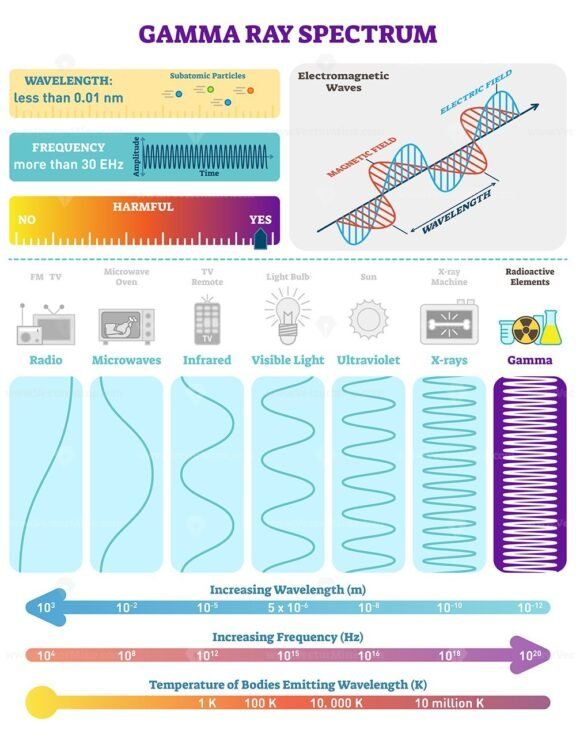
Non-ionizing and ionizing radiation have different wavelength, which directly relate to its energy. (Infographic: Adriana Vargas/IAEA).

The science behind radioactive decay and the resulting radiation

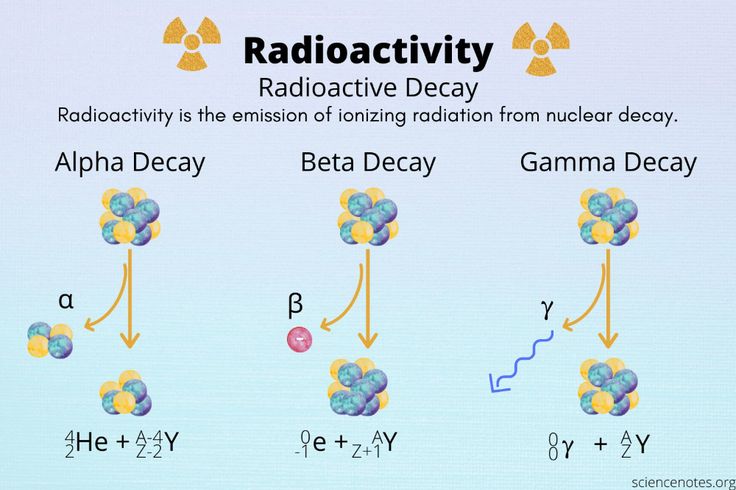
Ionizing radiation can originate from, for example, unstable (radioactive) atoms as they are transitioning into a more stable state while releasing energy.

Most atoms on Earth are stable, mainly thanks to an equilibrated and stable composition of particles (neutrons and protons) in their centre (or nucleus). However, in some types of unstable atoms, the composition of the number of protons and neutrons in their nucleus does not allow them to hold those particles together. Such unstable atoms are called “radioactive atoms”. When radioactive atoms decay, they release energy in the form of ionizing radiation (for example alpha particles, beta particles, gamma rays or neutrons), which, when safely harnessed and used, can produce various benefits.

images

The process by which a radioactive atom becomes more stable by releasing particles and energy is called “radioactive decay”. (Infographic: Adriana Vargas/IAEA)

What are the most common types of radioactive decay? How can we protect ourselves against the harmful effects of the resulting radiation?

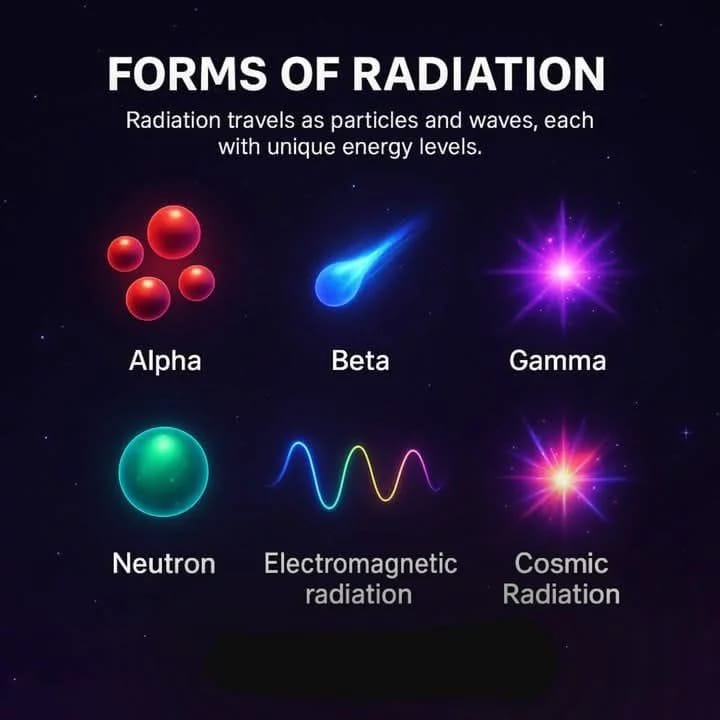
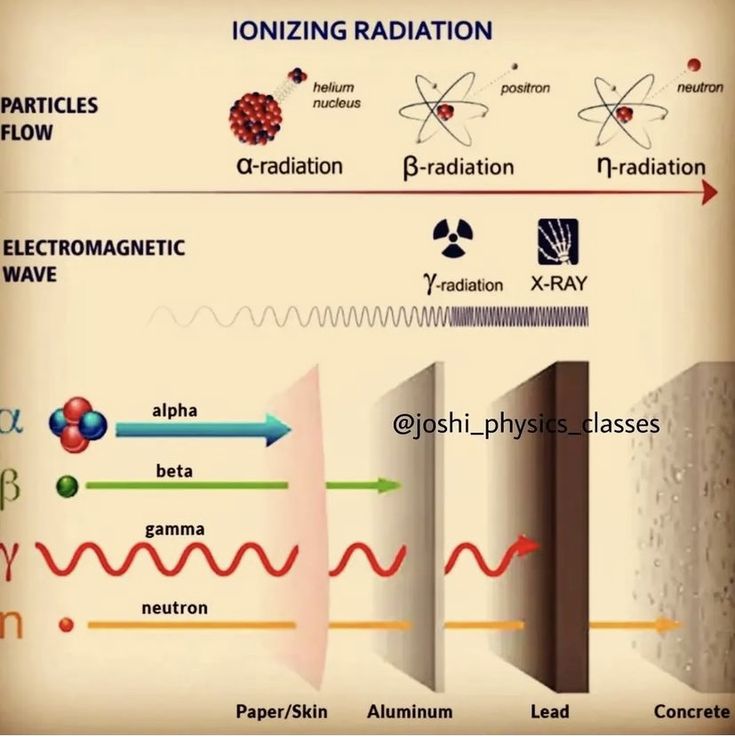
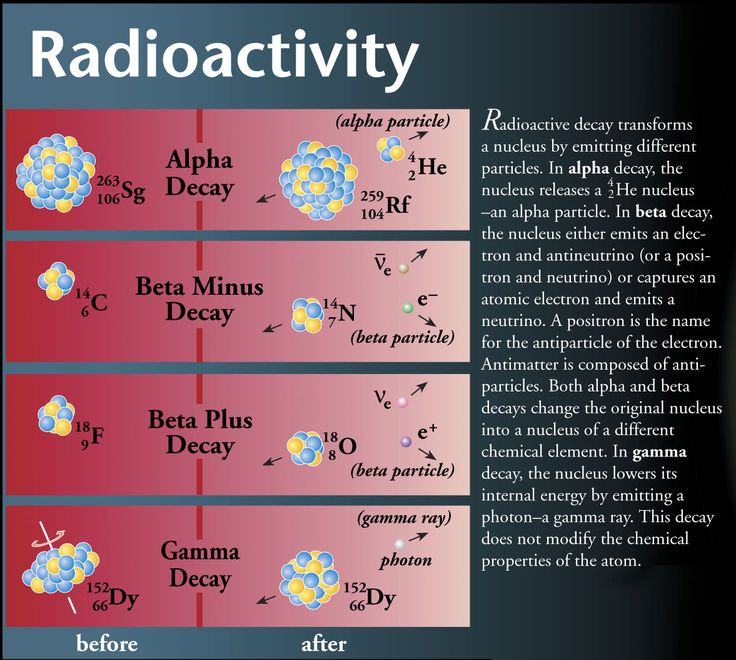
Depending on the type of particles or waves that the nucleus releases to become stable, there are various kinds of radioactive decay leading to ionizing radiation. The most common types are alpha particles, beta particles, gamma rays and neutrons.

Alpha radiation

images

Alpha decay (Infographic: A. Vargas/IAEA).

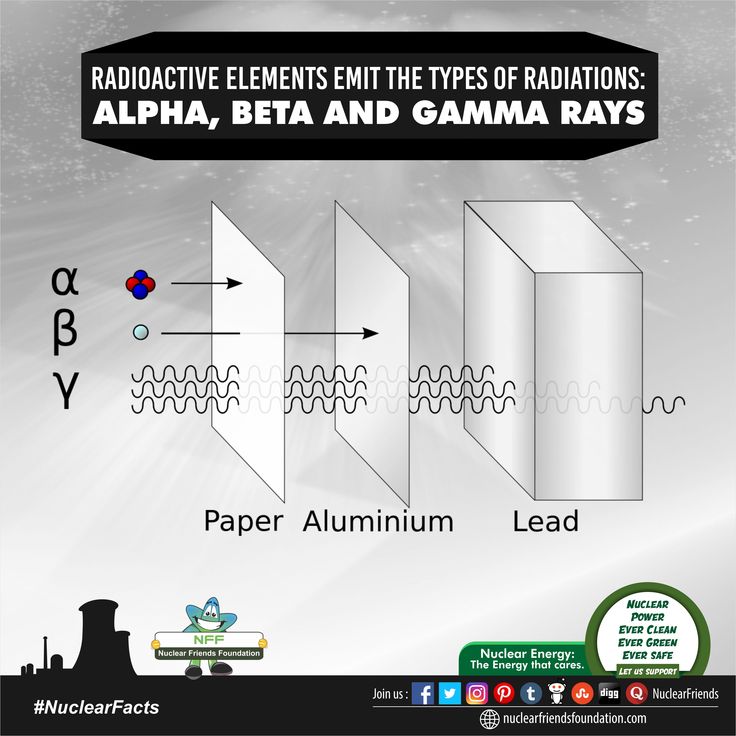
In alpha radiation, the decaying nuclei release heavy, positively charged particles in order to become more stable. These particles cannot penetrate our skin to cause harm and can often be stopped by using even a single sheet of paper.

However, if alpha-emitting materials are taken into the body by breathing, eating, or drinking, they can expose internal tissues directly and may, therefore, damage health.

Americium-241 is an example of an atom that decays via alpha particles, and it is used in smoke detectors across the world.

Beta radiation

images

Beta decay (Infographic: A. Vargas/IAEA).

In beta radiation, the nuclei release smaller particles (electrons) that are more penetrating than alpha particles and can pass through e.g., 1-2 centimetres of water, depending on their energy. In general, a sheet of aluminium a few millimetres thick can stop beta radiation.

Some of the unstable atoms that emit beta radiation include hydrogen-3 (tritium) and carbon-14. Tritium is used, among others, in emergency lights to for instance mark exits in the dark. This is because the beta radiation from tritium cause phosphor material to glow when the radiation interacts, without electricity. Carbon-14 is used to, for example, date objects from the past.

Gamma rays

images

Cobalt-60 is used in cancer treatments because of its ability to produce gamma rays, which can be used to combat tumours. A simplified mechanism is given in the figure above. At first, beta radiation is emitted from the cobalt-60 nucleus, resulting in a transformation to nickel-60 in a highly energized state (*Ni-60). This state quickly loses energy by emitting two gamma rays resulting in stable nickel-60. (Infographic: A. Vargas/IAEA).

Gamma rays, which have various applications, such as cancer treatment, are electromagnetic radiation, similar to X-rays. Some gamma rays pass right through the human body without causing harm, while others are absorbed by the body and may cause damage. The intensity of gamma rays can be reduced to levels that pose less risk by thick walls of concrete or lead. This is why the walls of radiotherapy treatment rooms in hospitals for cancer patients are so thick.

Neutrons

images

Nuclear fission inside a nuclear reactor is an example of a radioactive chain reaction sustained by neutrons (Graphic: A. Vargas/IAEA).

Neutrons are relatively massive particles that are one of the primary constituents of the nucleus. They are uncharged and therefore do not produce ionization directly. But their interaction with the atoms of matter can give rise to alpha-, beta-, gamma- or X-rays, which then result in ionization. Neutrons are penetrating and can be stopped only by thick masses of concrete, water or paraffin.

Neutrons can be produced in a number of ways, for example in nuclear reactors or in nuclear reactions initiated by high-energy particles in accelerator beams. Neutrons can represent a significant source of indirectly ionizing radiation.

Radiation

Radiation is everywhere; living on this planet means being exposed to natural radiation. Artificial radiation has been used successfully in the last centuries for medical diagnosis and treatment of pathologies like cancer.

Not only the cosmos and our environment contain radioactivity. Even the elements our bodies are made of are naturally found in different variants – isotopes – some of which are radioactive, for example the radioisotopes of potassium, caesium and radium.

Similar to visible light, radiation is of electromagnetic nature. When it is powerful enough to break molecular bonds, thereby ionizing matter (the process during which a neutral atom or molecule loses or gains electrons to form ions), it is called ‘ionizing radiation.’ Molecular bonds may occur in all materials, even in the building blocks of life – the DNA.

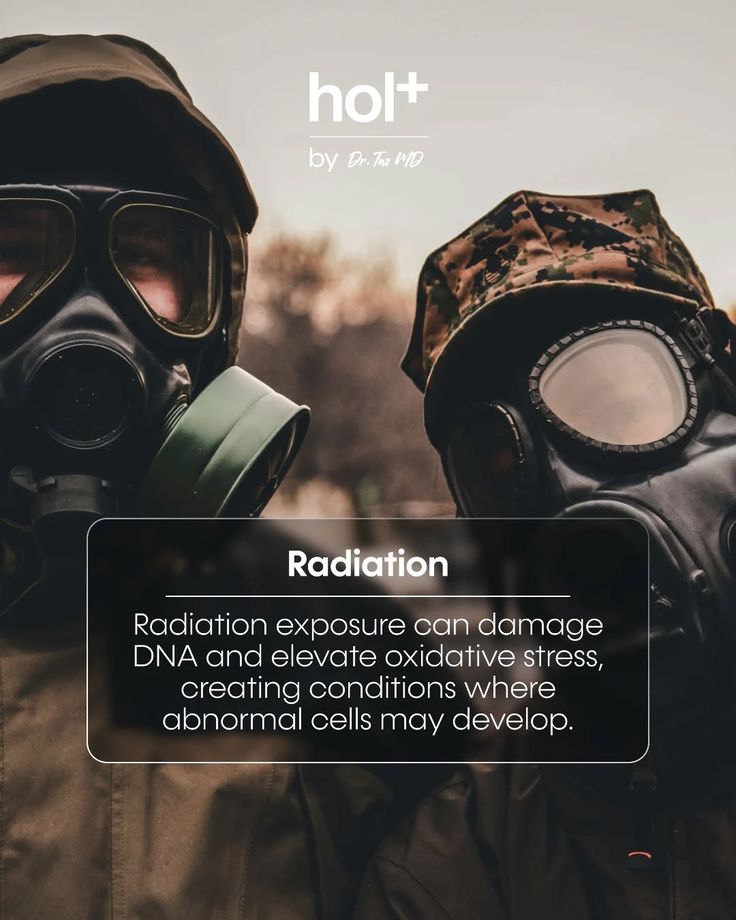
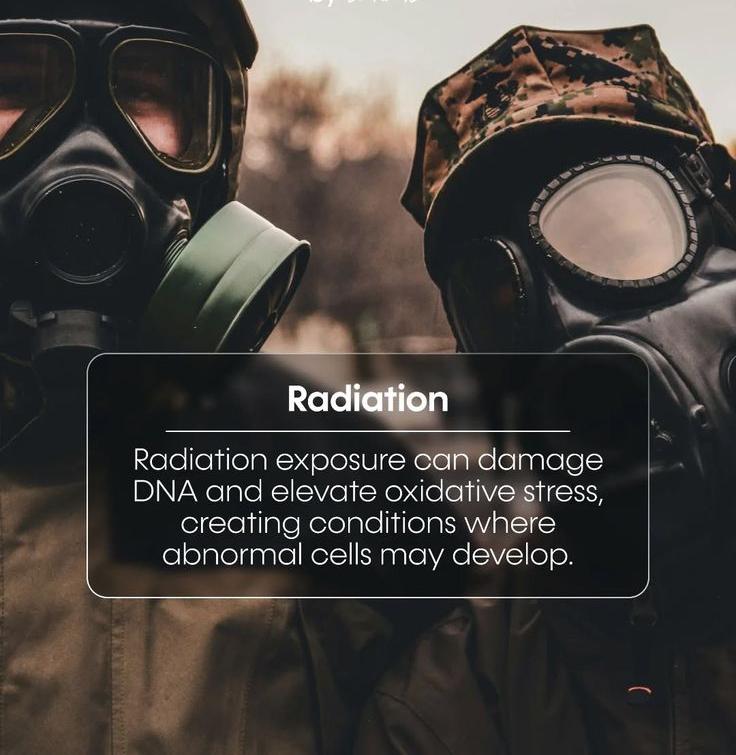
There is evidence that shows that alterations to DNA molecules caused by ionizing radiation may generate mutated biological cells. The vast majority of these mutations are not dangerous to human health, but there is a small probability that some mutations may cause cancer. For this reason, it is vital to understand how radiation interacts with biological matter.

Ionizing radiation can penetrate solid objects deeply. This characteristic is the basis for diagnostic radiology and radiotherapy. X rays, one of the forms of ionizing radiation, are emitted from an irradiation device on one side of the object. The radiation that passes through the object is detected by suitable detectors on the other side. This process can be used to produce an image that shows the internal structures of the irradiated object without opening it. When this process is applied in medicine, in a specialised field called diagnostic radiology, it provides images of the internal structures of the human body with minimal intervention.

In nuclear medicine, medical practitioners inject patients with a radioactive substance that accumulates in a targeted part of the body. By detecting the radiation exiting the body they can draw conclusions about the physiological functions of the anatomy. In radiotherapy, radiation penetrates the body to target and destroy tumours.

Natural sources make up around 80 per cent of the global average annual dose people are exposed to. The largest artificial source of exposure for humans is medical radiation. Its contribution to the total average annual dose is around 20 per cent. This is about half of the contribution of the largest natural component – radon inhalation in buildings – to the average annual dose.

For this reason, it is important to minimize unwarranted medical exposures to ionizing radiation. This is achieved by improving the processes of justification and optimization of exposures. Justification requires that a person may be exposed to radiation only when there is a clear net benefit for him or her. Optimization processes on the other hand minimize the radiation dose used to achieve a specific diagnostic or therapeutic result to the lowest level that is achievable and reasonable.

What is an Atom?

Nuclear Explained

5 January 2026

Emma Midgley, IAEA Office of Public Information and Communication

An atom is the smallest unit of an element that retains its chemical properties. It is made of protons, neutrons, and electrons. (Image: M. Magnaye)

Atoms are the building blocks of matter. Everything around us — from air and water, to rocks, plants and animals — as well as everything within our bodies, is made up of atoms.

They are very small, the smallest units of an element that retain the element’s chemical properties. The Ancient Greeks believed they were the smallest particles in existence, and the word ‘atom’ is derived from ‘indivisible’ in Greek. A single strand of human hair is as thick as 500 000 carbon atoms stacked on top of each other.

images

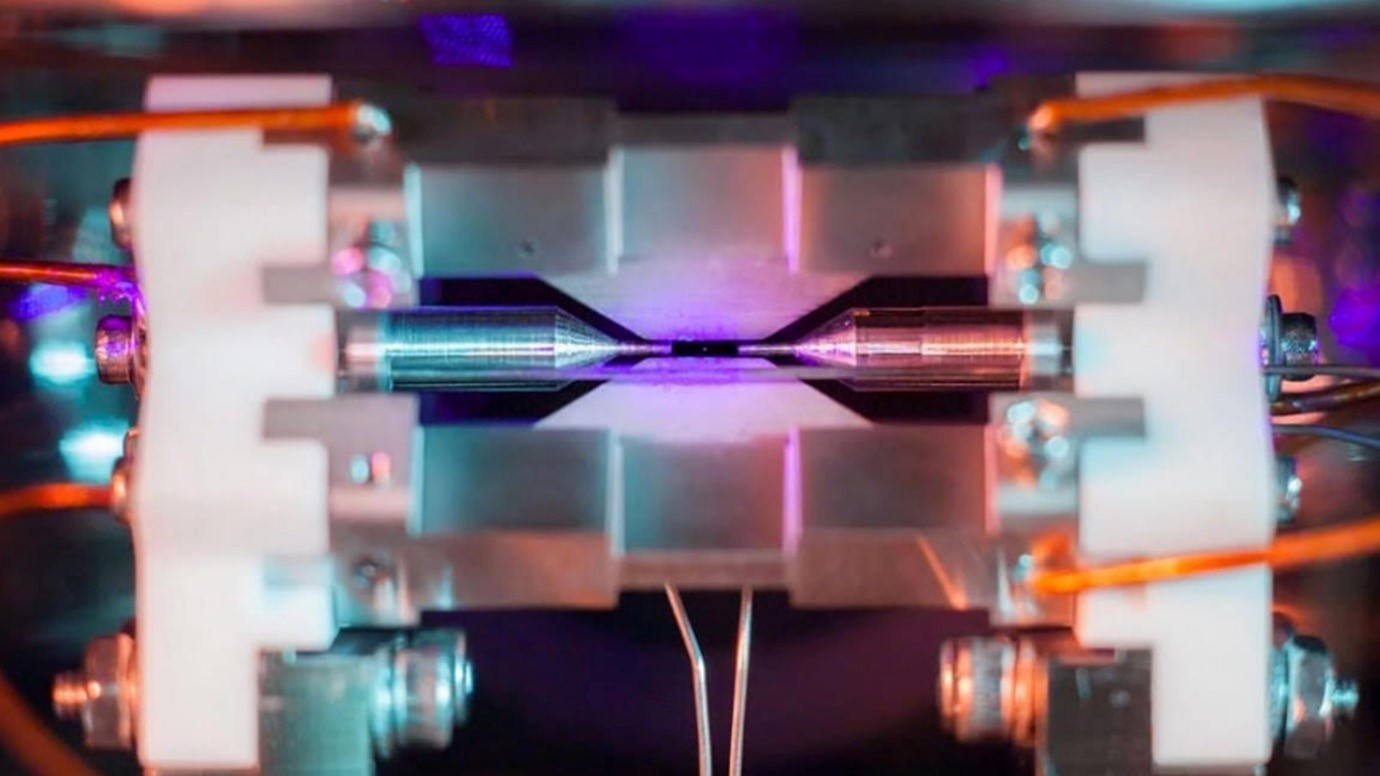
This single atom of the metal strontium is visible in this photograph because it has absorbed and re-emitted the light of a laser. The electrodes in the picture are two millimetres apart. (Photo: David Nadlinger/Oxford University)

Atoms cannot be seen with the naked eye, or even under a standard microscope. An atom is too small to deflect visible light waves, meaning it will not show up under light-focusing microscopes. Atoms can be viewed under an electron microscope, which generate electron waves that can interact with atoms. In the picture above, the atom is ‘visible’ because it has absorbed and re-emitted the light of a laser.

images

What do atoms look like? Scientists have changed their minds over the centuries. (Infographic: M. Magnaye)

What are Atoms Made Of?

Each atom consists of three types of particles: protons, neutrons and electrons. At the centre of an atom is a dense nucleus, which contains protons and neutrons, and is much smaller than the entire atom. If the nucleus of the atom were the size of a marble, the atom would be the size of a sports stadium.

Protons have a positive electrical charge, while neutrons are neutral. The nucleus stays together due to the ‘nuclear force’. This force binds the protons and neutrons together at distances close to the size of the nucleus. The nuclear force at this distance is much stronger than the electrical repulsion between the protons (as they have equal charges, they would otherwise repel each other). At larger distances this nuclear force rapidly becomes insignificantly small.

The number of protons in an atom’s nucleus determines which element it is. For example, an atom with one proton is hydrogen, while an atom with eight protons is oxygen.

Surrounding the nucleus is a cloud of electrons — negatively charged particles. The atomic nucleus and the electrons are bound together by Coulomb force interactions – the forces in physics that describe the repulsion or attraction between these charged particles. However, when an electron gains energy, it can separate from the atom, causing the atom to become a positively charged ion.

images

The atom at the centre of the IAEA’s logo has four electrons – meaning it is Beryllium if it is neutral and not ionized. (Infographic: M. Magnaye)

What are Ions?

Atoms with the same number of negatively charged electrons and positively charged protons are neutral, as the charges cancel each other out. If an atom gains or loses electrons it becomes an ion.

images

While the electric field of a neutral atom is weak, an electrically charged or ionized atom has a strong electrical field, making it strongly attracted to oppositely-charged ions and molecules. Atoms can be ionized by collisions with other atoms, ions and subatomic particles. They can also be ionized by exposure to gamma or X ray radiation. Ionizing radiation refers to radiation that has enough energy to break an electron away from an atom. It can also chemically alter material, for example damaging DNA in living tissue.

images

Most atoms on Earth are stable, mainly thanks to a balanced composition of particles (neutrons and protons) in their nucleus.

However, in some types of unstable atoms, the composition of the number of protons and neutrons in their nucleus does not allow them to hold those particles together. In this case, the atom ‘decays’, and releases energy in the form of radiation (for example alpha particles, beta particles, gamma rays or neutrons), which, when safely harnessed and used, can produce various benefits.

Read more: What are Isotopes?

images

Ernest Rutherford: Inventor of the ‘Atom Smasher’

In 1917, a scientist called Ernest Rutherford discovered that by blasting beams of radioactive alpha particles into nitrogen gas, the nitrogen atom could be transmuted into oxygen while ejecting a hydrogen nucleus. This subatomic particle (the hydrogen nucleus) was later renamed the proton.

images

Rutherford’s discovery led to the development of the first particle accelerator, initially referred to as an ‘atom smasher’. This powerful machine could accelerate charged particles using an electrical field to high energies along a path and used strong magnets to create beams of single charged particles. When the fast-moving particles hit the target (they could go almost as fast as the speed of light), the atoms in the target split apart.

Read more: What are particle accelerators?

Particle accelerators also can be used to create radioactive material by shooting charged particles at atoms to change them into different, unstable atoms, such as technetium-99m for medical imaging and radioisotopes for targeted cancer therapy.

Today, particle accelerators are also used to sterilize medical equipment, research the origins of the universe (for example, at the Large Hadron Collider), as well as to analyse air samples and to enhance materials and make them more resistant to damage. Different types of particle accelerators include ion implanters, electron beam accelerators, cyclotrons, synchrotrons, linear accelerators (Linacs) and electrostatic accelerators.

Splitting the Atom: Nuclear Fission

In the 1930s, scientists found out that if a neutron is fired into certain uranium atoms, they could split into two and emit a certain number of neutrons, releasing a huge amount of energy along the way. This is called fission, from the Latin word for ’split’.

Uranium, with 92 protons, has the highest atomic number of all naturally occurring elements on Earth. Uranium-235 is easier to split (fission) than other isotopes because its nucleus is relatively unstable, and readily absorbs a neutron, causing it to break apart into two lighter atoms. However, only 0.7 per cent of uranium found on earth is this type of uranium, described as fissile.

Read more about uranium here

images

Fission can be used to create a nuclear chain reaction. Every time a uranium-235 atom is split it releases on average 2.5 neutrons. These can go on to split further fissile nuclei, releasing yet more neutrons. However, these ‘fast’ neutrons initially travel with too much energy to be effective at causing fission. Using a ‘moderator’ such as water or graphite slows down the neutrons. The neutrons lose most of their energy in collisions with the hydrogen or carbon atoms to become ‘thermal’ or ‘slow’ neutrons which have a much better chance of splitting other uranium nuclei.

The nuclear fission technique is now used to make 10% of the world’s carbon-free energy — as nuclear fission produces no carbon dioxide.

What happens to Atoms in Nuclear Fusion?

Nuclear fusion is the process by which two light atomic nuclei combine to form a single heavier one while releasing massive amounts of energy, a theory first understood in the 1920s.

Fusion reactions take place in a state of matter called plasma — a hot, charged gas made of positive ions and free-moving electrons with unique properties distinct from solids, liquids or gases.

images

The sun, along with all other stars, is powered by this reaction. To fuse, nuclei need to collide with each other at extremely high temperatures, around one hundred million degrees Celsius. The high temperature provides them with enough energy to overcome their mutual electrical repulsion. Once the nuclei come within a very close range of each other, the attractive nuclear force between them will outweigh the electrical repulsion and allow them to fuse. For this to happen, the nuclei must be confined within a small space to increase the chances of collision. In the sun, the extreme pressure produced by its immense gravity creates the conditions for fusion.

Radiation science examines the interaction of high-energy particles and electromagnetic waves with matter, governed by processes such as ionization, excitation, and nuclear transmutation. At the atomic level, ionizing radiation displaces lattice atoms, producing vacancies, interstitials, and defect clusters, which evolve under temperature and stress into macroscopic material degradation.

Core Scientific Foundations

  • Radiation-Matter Interaction: Governed by cross-sections (σ), linear energy transfer (LET), and stopping power.
  • Displacement Damage: Measured in displacements per atom (dpa), critical in reactor materials and aerospace shielding
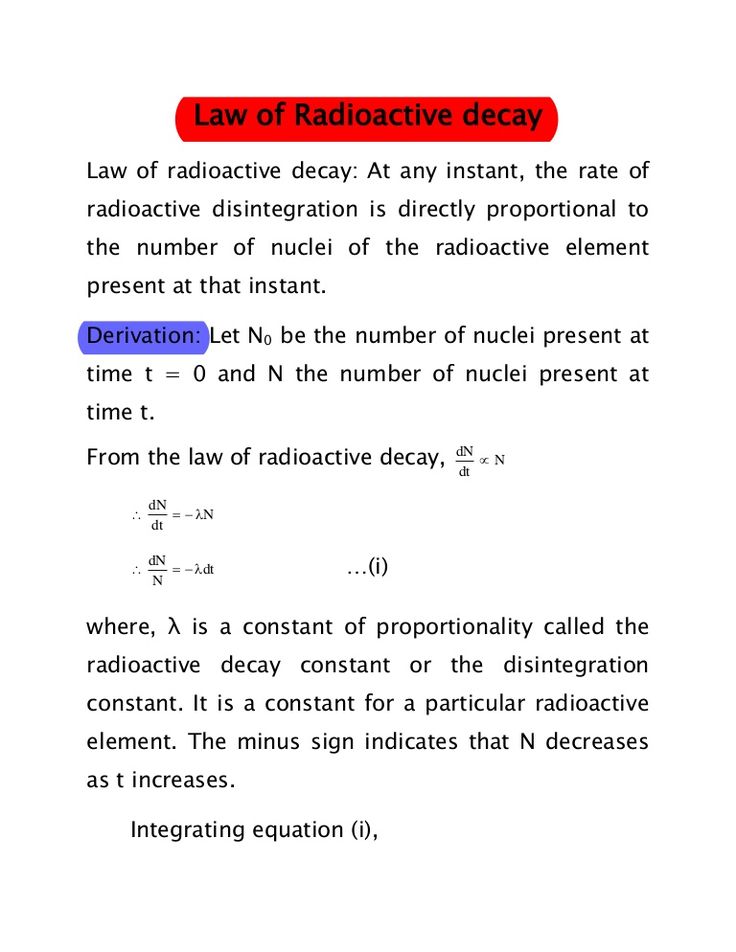
  • Decay Kinetics: Exponential decay models define isotope stability and half-life behavior.

Advanced Research Areas

  • Radiation-resistant alloys (ODS steels, ceramic composites)
  • High-flux neutron environments (fusion reactor simulation)
  • Monte Carlo radiation transport simulations (MCNP, GEANT4)
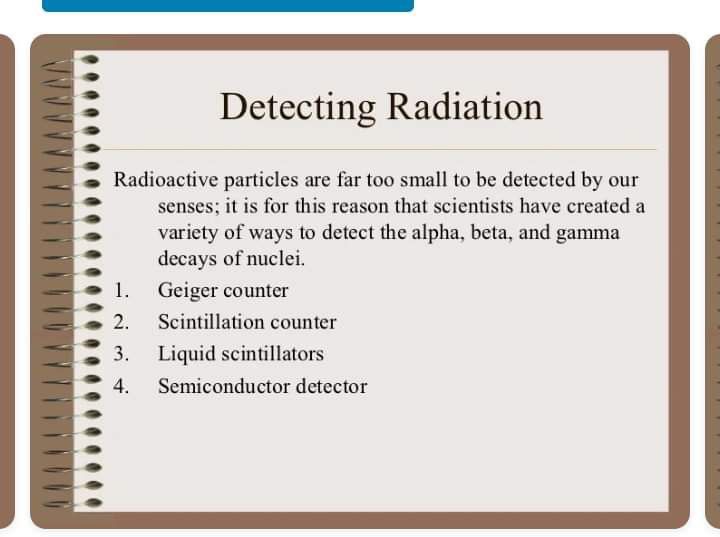
  • Real-time dosimetry using semiconductor detectors

Emerging Directions

  • Self-healing materials that recombine defects under irradiation
  • Nano-engineered shielding with enhanced attenuation efficiency
  • Integration with AI for predictive radiation damage modeling

Key Challenges

  • Long-term structural degradation in reactors
  • Safe handling and disposal of radioactive waste
  • Accurate modeling of mixed radiation fields
whatsapp